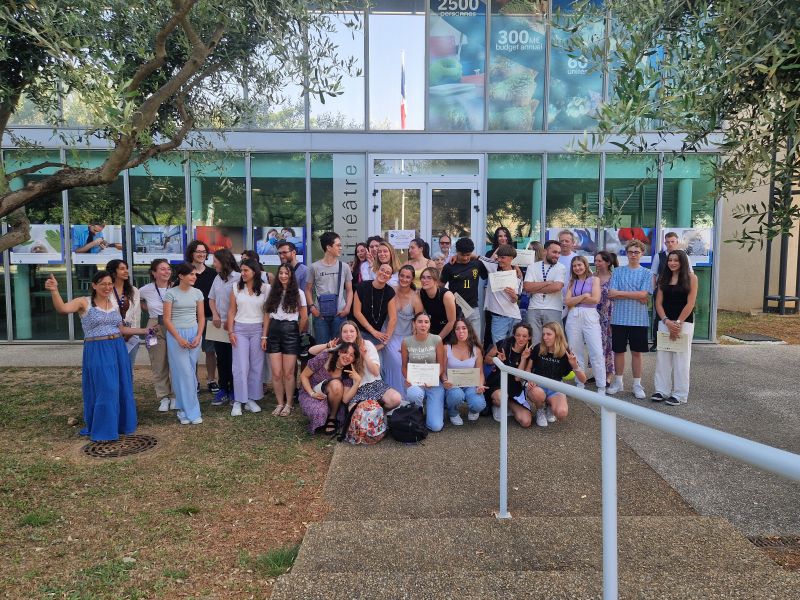
Welcoming High School Students for Work Experience Internships
In June 2024, we launched a new internship program for tenth-grade students (élèves de seconde), focusing on biological study models.
This year, over a two-week period, we had the pleasure of co-hosting 12 high school students alongside the IBMM. They were fully immersed in the heart of scientific research at the CNRS, specifically within the IGMM and CRBM units.
Experience the highlights of their time with us: from observation to hands-on practice, dive into their discovery of biological research!
BIOLuM organized a visit for the FRM!
A few weeks ago, our laboratory doors opened to welcome donors and partners of the Fondation pour la Recherche Médicale (FRM). It was a wonderful opportunity to tour the facilities, exchange ideas directly with the scientists, and dive into the heart of the research being conducted within our three units (CRBM, IGMM, and IRIM).
By combining expertise in cell biology, genetics, and infectiology, this research aims to better understand living systems in order to develop new therapeutic approaches.
Apprentis chercheurs
The programme apprentis chercheurs developed by L’Arbre des Connaissances, arrived on our campus in 2019 thanks to an initiative by IRIM. It is now supported by teams from our three research institutes.
The aim is to host a pair of students — one in 9th grade and one in 11th grade — one Wednesday afternoon per month, to introduce them to the world of research.
The year concludes with a mini scientific congress, during which the students present their research project to their families, in the presence of their supervisors.
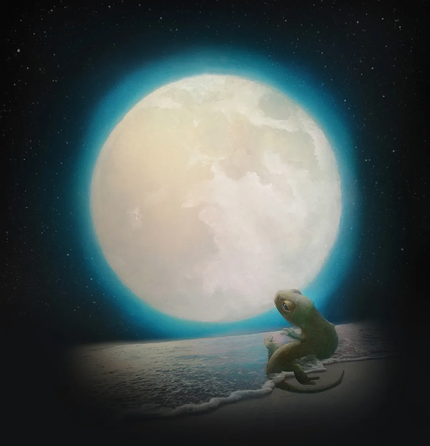
Nuit Méditerranéenne des chercheuses 2026
Several of us participate to la Nuit Méditérranéenne des chercheuses in Montpellier in september.
Fête de la Science
Every year, several of us take part in the fête de la Science. Stay tuned to find out where you can meet us during the 2026 edition (October 2–12), whose theme will be: “Saveurs Savantes.”
Déclics
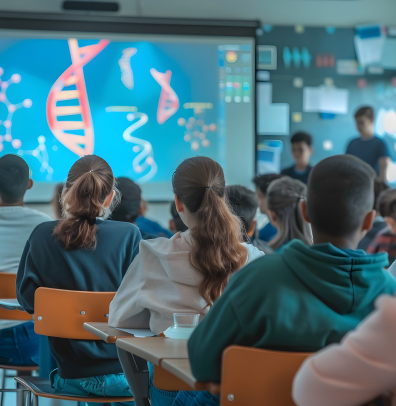
Since 2017, several of us participate to the programme Déclics coordinated by the FSER Circle, the programme takes place in a high school over half-day sessions. One of us gives a 30-minute talk outlining their career path, research topic, and an overview of the scientific approach.
This is followed by a series of ten-minute “speed meetings” between a class of high school students and 12–15 members of research staff (researchers, faculty members, engineers, technicians, administrative staff, PhD candidates, or postdoctoral researchers).
Sidaction
Each year, early-career researchers (PhD students and postdoctoral researchers) organise a fundraising event for Sidaction by selling homemade cakes on our campus.
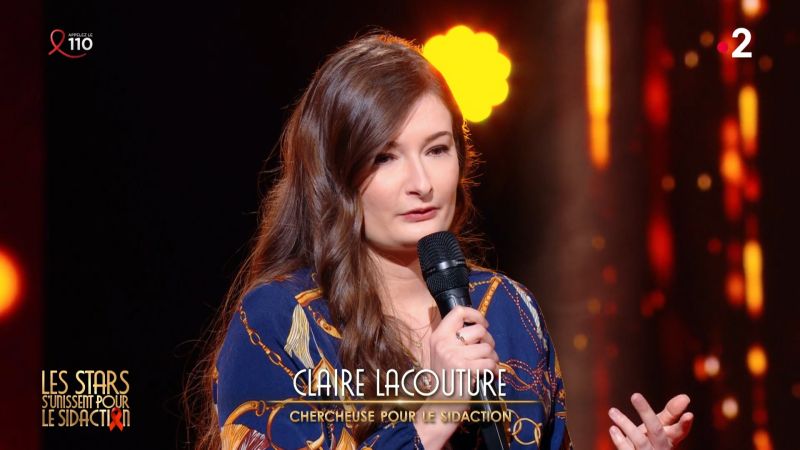
Several of those funded by Sidaction take part in public lectures and scientific events held at various venues across the city of Montpellier, in partnership with associations such as ENVIE. They also contribute to national television programmes and videos (TF1, France 2).