
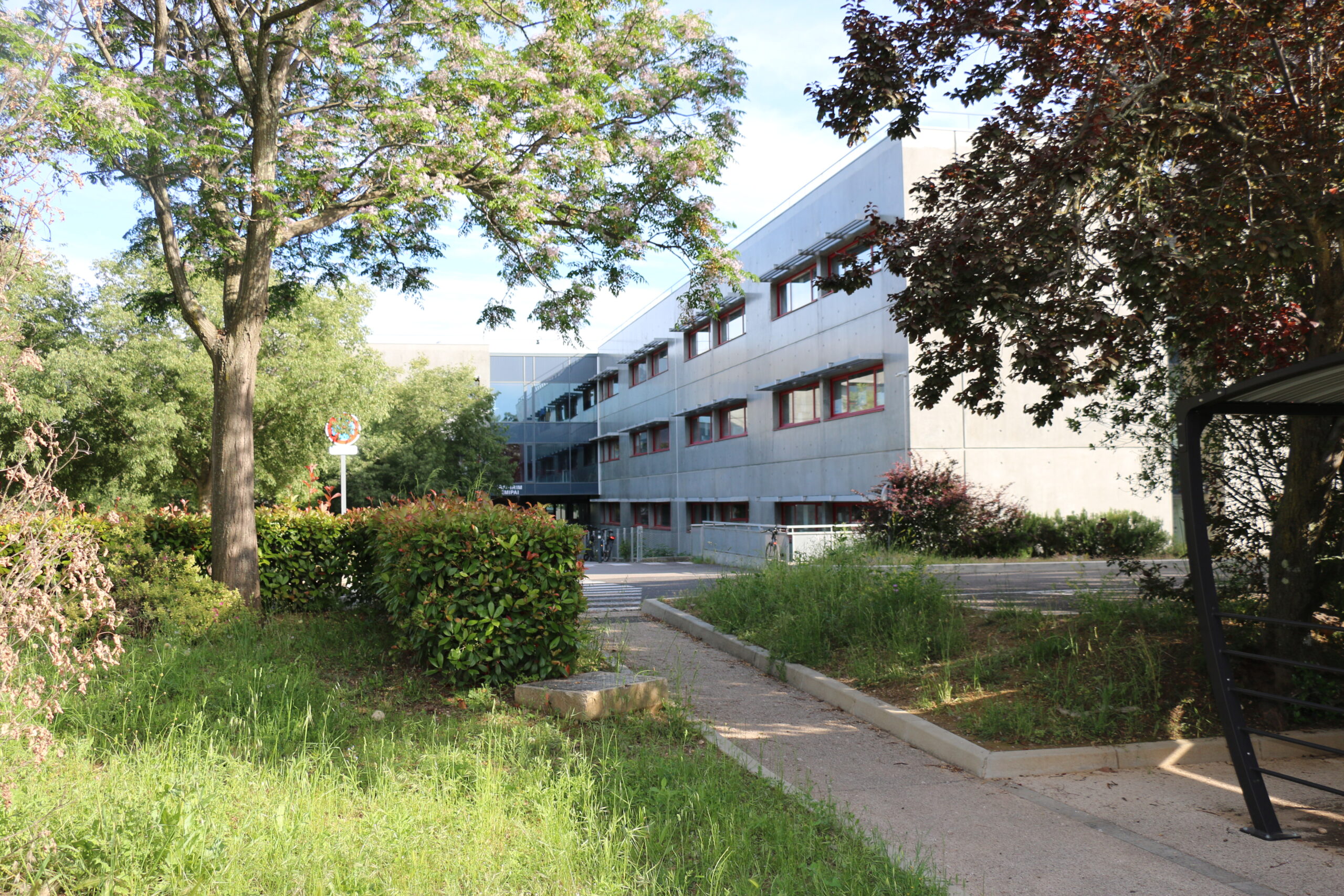


Our campus BIOLuM (BIOcentre Lunaret Montpellier) three research units focused on cell biology (CRBM), molecular genetics (IGMM) and infectiology (IRIM). We are affiliated with the CNRS (UAR5261) and the University of Montpellier.
The CRBM (Montpellier Cell Biology Research Center) is dedicated to understanding the mechanisms that control fundamental processes in cell biology and the impact of their disruption on human diseases. CRBM specializes in the study of cell division control, cytoskeletal organization, lipid membrane dynamics, as well as cellular adaptation and robustness. CRBM also strives to strengthen its identity in the field of cell biology by fostering interdisciplinary approaches and building an international reputation. CRBM hosts three core facilities of the BIOCAMPUS UAR: the Montpellier Ressource Imaging platform (MRI-CRBM), the Montpellier Genomic Collections platform (MGC-CRBM) and the ZEFIX platform (ZEbraFIsh & Xenope).
The IGMM (Montpellier Institute of Molecular Genetics) aims to conduct outstanding and innovative fundamental research with potential applications in biomedicine and molecular and cellular medicine, in particular to address cancer and certain infectious or genetic diseases. Its main areas of expertise include RNA biology, genetic and epigenetic regulation, tumorigenesis and the cell cycle, immunology, viral infectiology, and biotherapies. IGMM also operates an animal facility shared with BIOLuM for mouse studies.
The IRIM (Montpellier Institute for Infectious Disease Research) aims to improve our understanding of host–pathogen interactions, particularly in the context of human infectious diseases. It is a center of excellence in infectiology, with a strong focus on the molecular and cellular mechanisms of viral infections (retroviruses, respiratory viruses, arboviruses, measles, hepatitis, etc.) and bacterial infections (Coxiella burnetii, Mycobacterium tuberculosis, Brucella, Nocardia), as well as on the processes underlying resistance to infection (autophagy, interferons, restriction factors). Its research also addresses the development of strategies to combat pathogens that are resistant to current treatments.
CEMIPAI, which specializes in biosafety level 3 (BSL-3) containment infrastructure, provides access to BSL-3 laboratory rental and training, BSL-3 antiviral/antibacterial screening services, and state-of-the-art advanced microscopy technologies (TIRF-PALM, spinning-disk, atomic force and fluorescence microscopy, STED, and automated confocal microscopy). This represents a major asset for the study of BSL-3 pathogens.
These BIOLuM research units also benefit from the BioCampus platforms and from collaborations with the University of Montpellier, forming a dynamic and original scientific ecosystem that fosters collaboration and the training of the next generation of researchers.
The CNRS–Lunaret campus also hosts the Institut Carnot Chimie Balard and the CEFE, broadening its impact from molecular biology to ecosystems.
By combining cell biology, genetics, immunology, infectiology, and biophysics, the BIOLuM research units actively contribute to advances in oncology, infectious, genetic, and neurological diseases.


